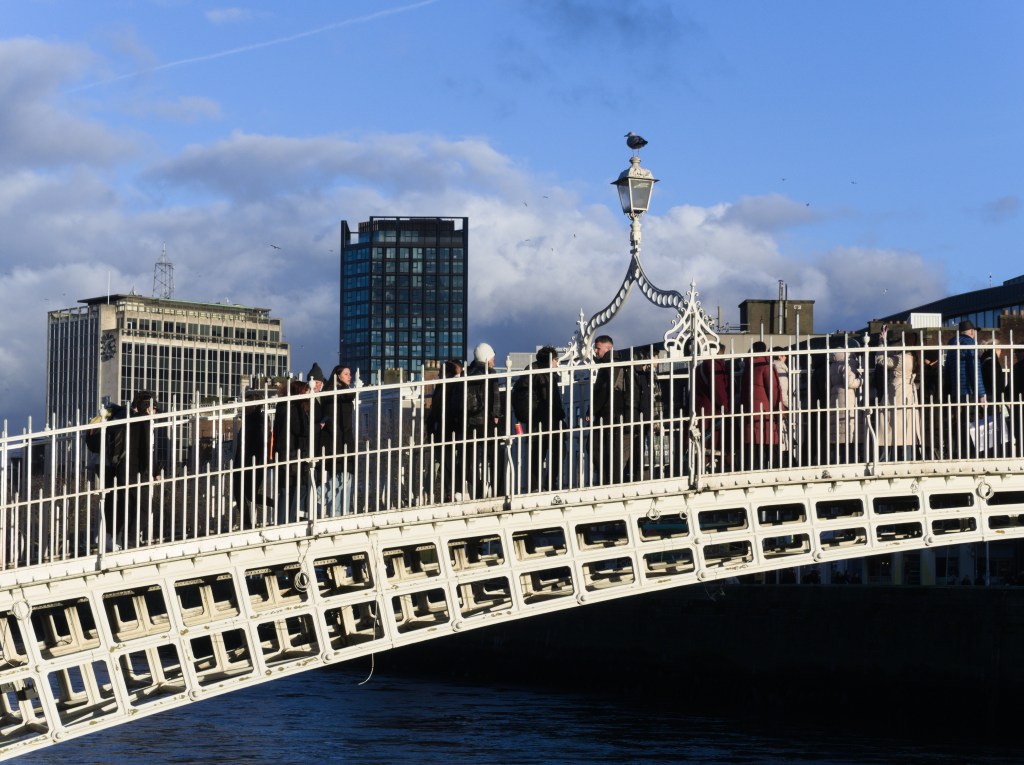
I lived in Dublin for five years. Five years in which I discovered the Island of Ireland: its sharp beauty, its kindness, and its culture that somehow feels both ancient and current at the same time. The island that produced Nobel Prize winners, world-recognised music, and probably the most famous stout on the planet. I lived in Dublin for five years, and in February 2026 I went back for a few days.
1) Scene-setter
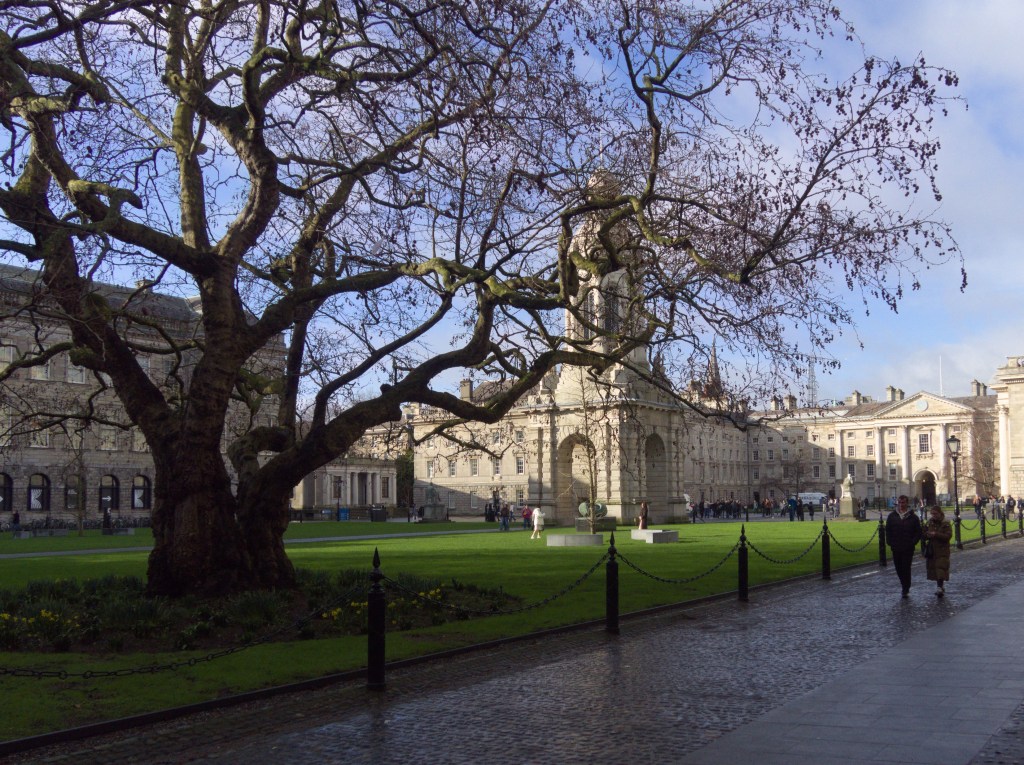
During my time in Dublin, I had the privilege (and the honour) to work at Trinity College Dublin. Founded in 1592 by Queen Elizabeth I, Trinity is Ireland’s oldest university. A place where time feels layered. Trinity has welcomed brilliant minds, such as Oscar Wilde, Sally Rooney, Samuel Beckett, and Ernest Walton, the first person to successfully split the atom. On the rare sunny days, I would walk through the campus and let myself be carried by its quiet choreography: students spilling into courtyards, tourists pausing in wonder. And sometimes, on the even rarer sunny summer days, I would sit on the very grass you see in the photo below, watching the light slide across the old buildings, as if Dublin, just for a moment, was was warming my soul.
2) Mid-scene
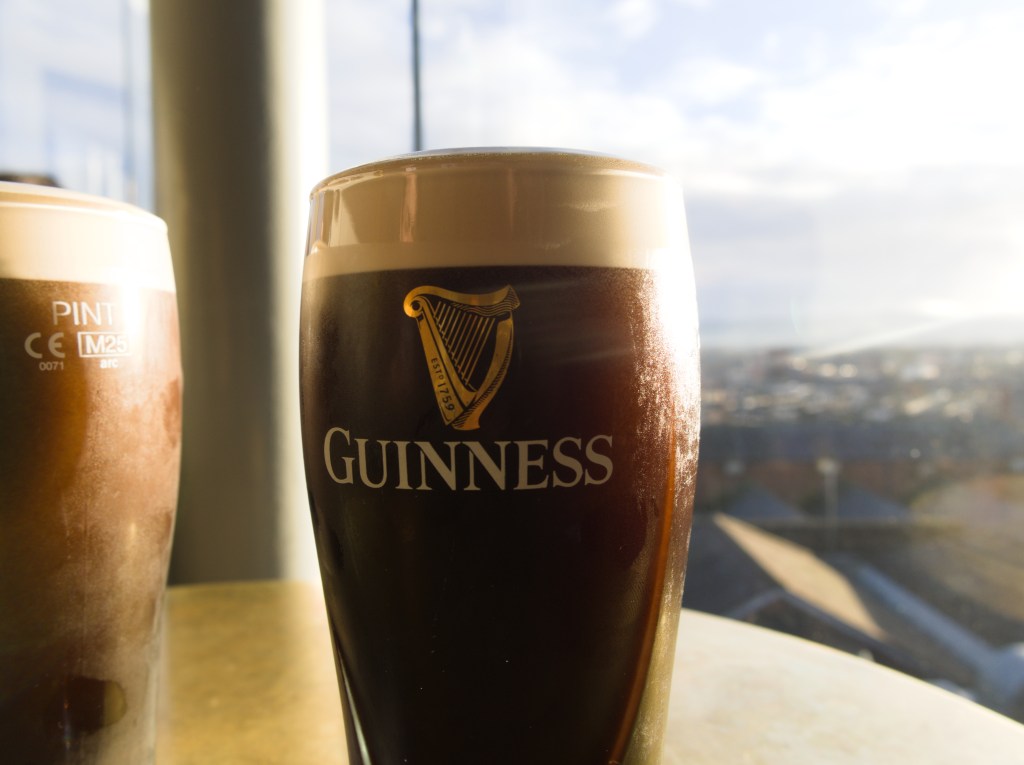
I cannot think about Dublin (or Ireland) without thinking about Guinness. It’s a marriage, a partnership (there’s a kind of story behind it that explains a lot about the city). If you don’t like Guinness, you might like the Guinness in Ireland. There are many pubs where you can get a good pint, but the one you drink at the Guinness Storehouse seems to have a different taste. The museum guides you through the making of the stout, and your senses are constantly nudged. Flavours, smells, textures. Then, at the end, you get your pint overlooking the whole city. This pint of Guinness does not taste like a classic stout. This pint of Guinness tastes like Dublin.
3) Human trace
One of the reasons I left Dublin had to do with the crowds. People everywhere, at any time of day and night. There were always people.
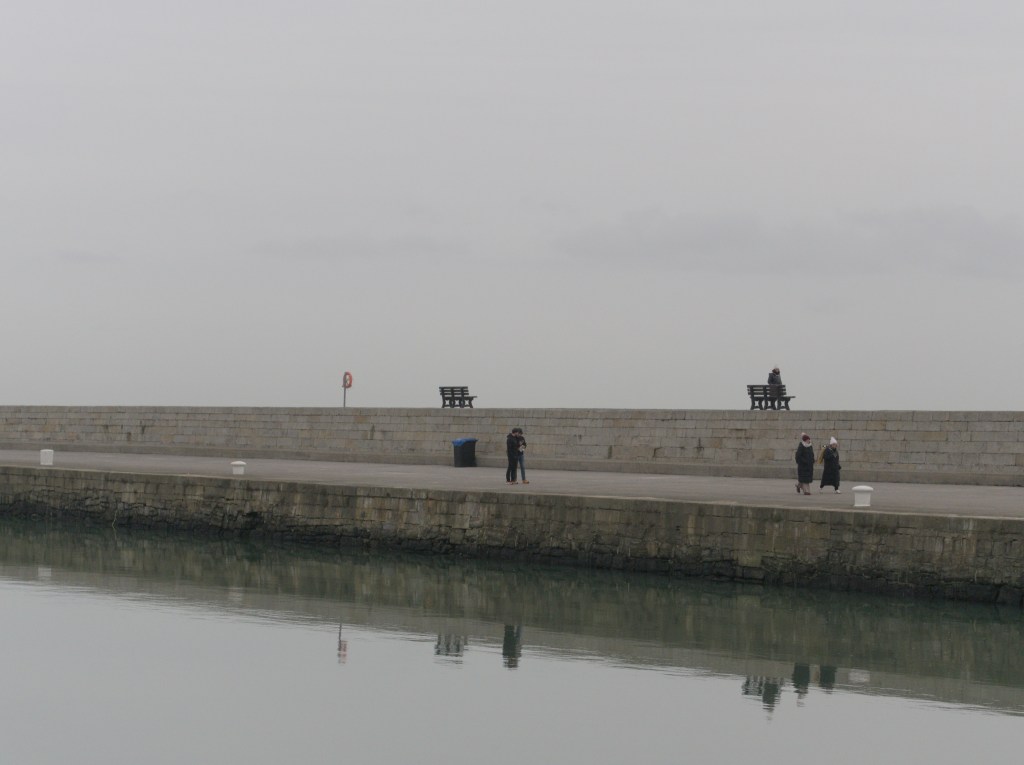
During my latest visit, I decided to escape the centre and head to Howth, a peninsula village and outer suburb of Dublin. Howth offers wonderful walks along the cliffs, and a peaceful harbour. Or at least that’s what I expected. Despite going early on a cold Tuesday in February, I found more people than anticipated, but fewer than I could possibly fear. The walk began calm and almost windless, and then the Emerald Isle did what it does best: it changed its mind. After an hour, the wind arrived, blunt and unapologetic, as if to remind me what kind of country this is. However, that didn’t stop me from having my usual fish ’n’ chips at the end (at Beshoff Bros), facing the harbour, watching a handful of people try to enjoy a winter walk on the docks.
4) Detail
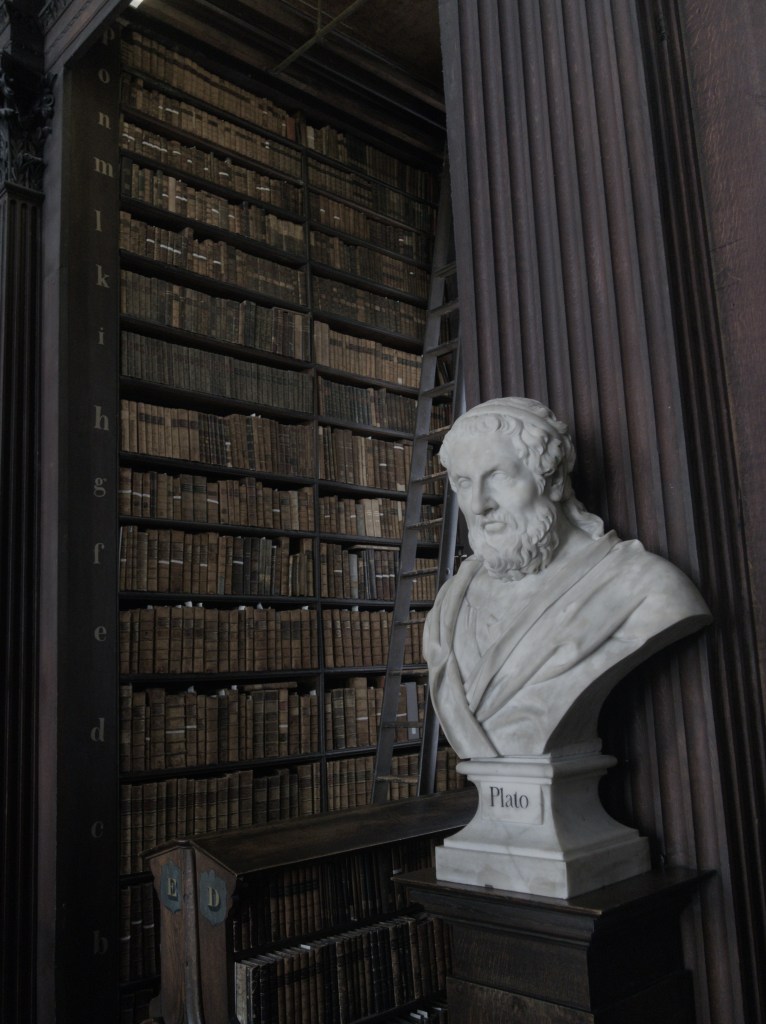
Dublin is beautiful, and its beauty hides in details. You can find it in the coloured doors of Georgian houses. You can find it in the security guard who says “bless ya” after you sneeze in the middle of the street. You can find it in a loud pub, full of people protecting their pints with their bodies. You can find it in Michelangelo’s The Taking of Christ, housed at the National Gallery. Or you can find it in the old Trinity Library. Built during the 18th century, it contains the 8th-century manuscript known as the Book of Kells, which arrived at the college in 1661. And then there is the Long Room, one of the university’s most iconic landmarks. This 65-metre room houses more than 200,000 of the library’s oldest books, alongside a marble bust collection that has long been overwhelmingly male (in the photo below, you can see Plato). In November 2020, Trinity announced the addition of four marble busts featuring female scholars: Rosalind Franklin, Ada Lovelace, Augusta Gregory, and Mary Wollstonecraft. From a visual point of view, this chamber was remarkably pleasing—almost too perfect to be real; I say was because most of the books have now been removed for conservation, while the Long Room is updated to meet modern fire-safety standards. Now it’s almost empty. But its beauty cannot be hidden.
5) Sensory anchor (athmosphere)
I mentioned pubs earlier, and the way the Guinness at the Storehouse tastes of Dublin. Well: on the corner of Red Cow Lane and King Street North, on the edge of Smithfield Square, you can find a pint of Guinness that tastes of Ireland. Some of the world’s best musicians gather here to play Irish traditional music, every day. You can hear it before you even go in. As you approach the door, the notes reach you first—distant, then clearer, then suddenly all around you. And once you step inside, you’re dropped into another dimension. An older one. One that doesn’t need speakers or playlists. At The Cobblestone, there is no “music in the background”. The music is the pub. Musicians jamming, tunes passing hand to hand, your pint vibrating slightly on the table. The Cobblestone is my favourite pub in Dublin, and if you visit the city, you should go.

Closing
- Best part: The best part was watching the first 6 Nations game at the Aviva Stadium. And not any game, but Ireland versus Italy. What an experience!
- Unexpected: How quickly Dublin felt familiar, and how quickly it reminded me why I left.
- Note to future me: Next time, rent a car and drive across the Wild Atlantic Way!
Shot on OLYMPUS OM E-M10MarkII · Edited in RawTherapee v 5.12
 Giampiero Tarantino