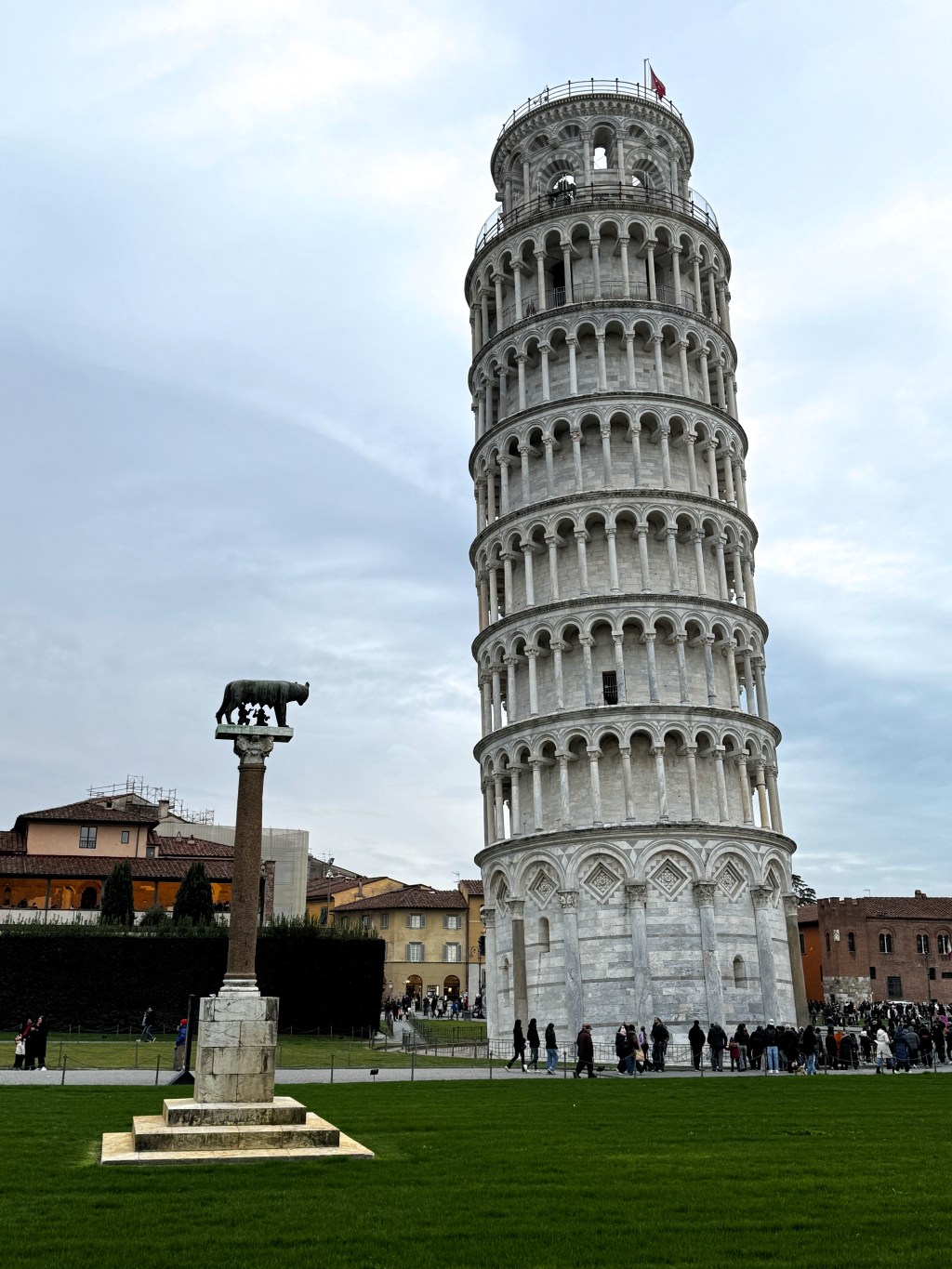
I lived in Pisa for 11 years. I moved there to study my undergraduate degree and master’s, and then, I stayed. I stayed until I could not anymore. I stayed until I felt it was time to leave and explore new horizons. I stayed until I didn’t. And it felt right. I’ve come back many times since (weddings primarily). This time, I’m back for something quieter: a few days to be with my sister.
1) Scene-setter
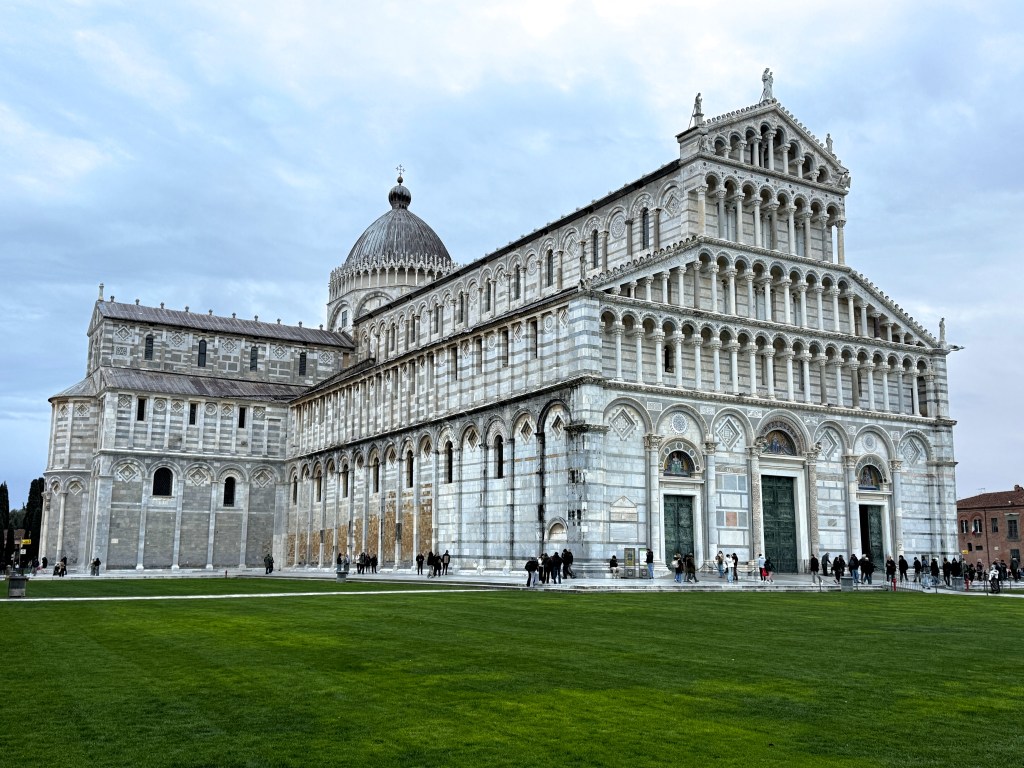
Pisa is many things. Pisa is Italian history. Pisa is tradition. Pisa is timeworn stone on the “Lungarni” and the slow bend of the Arno river, bicycles skimming along the riverbanks and students filling the streets with restless energy. Pisa is the iconic postcard of Piazza dei Miracoli, and, just as much, the everyday corners beyond it, where the city feels lived-in, intimate, and real. I miss Pisa. Sometimes.
2) Mid-scene
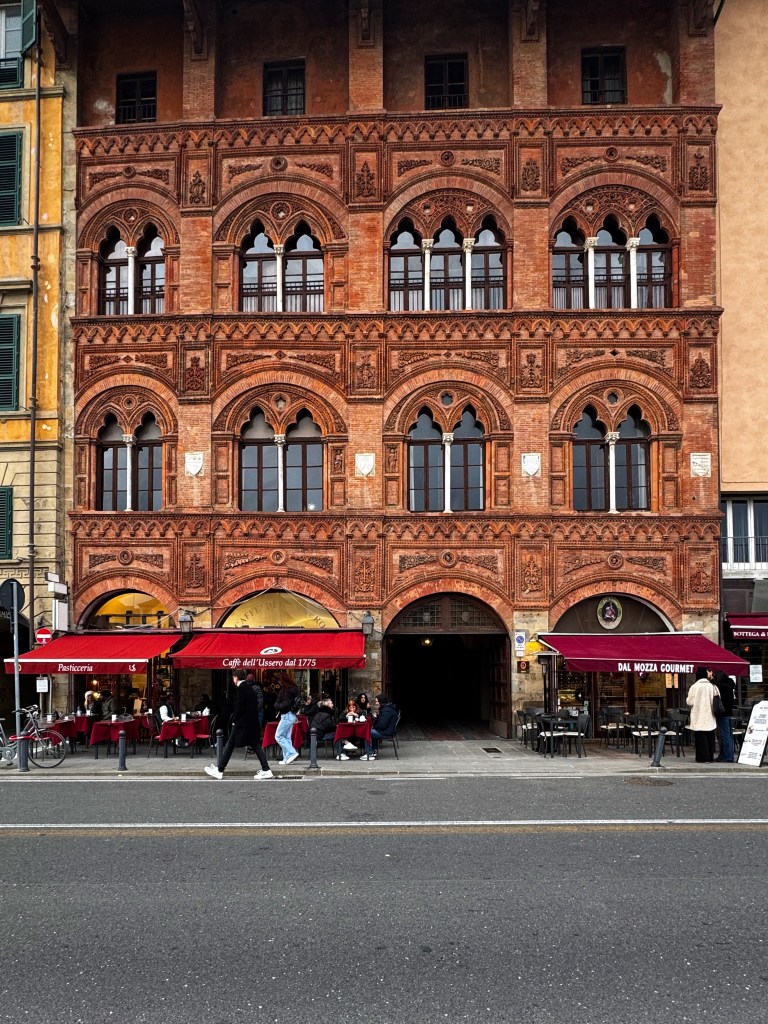
Most visitors assume the Leaning Tower is Pisa’s only building that refuses to stand straight. In reality, the city’s soft, alluvial ground (sand and clay) has nudged other structures out of plumb too, most notably the bell towers of San Nicola and San Michele degli Scalzi. And the “leaning” theme doesn’t stop with churches. Palazzo Agostini, on the Lungarno, is another example. It has been owned by the Agostini family since 1496, with descendants still in residence. Palazzo Agostini houses Caffè dell’Ussero, which was founded in 1775 and often cited as the oldest café in Pisa and the third oldest in Italy (after Venice’s Florian and Rome’s Greco). Its name, according to local tradition, comes from a group of hussars who stayed in the building in 1750 with Grand Duke Francis I of Lorraine and Maria Theresa of Austria.
3) Human trace
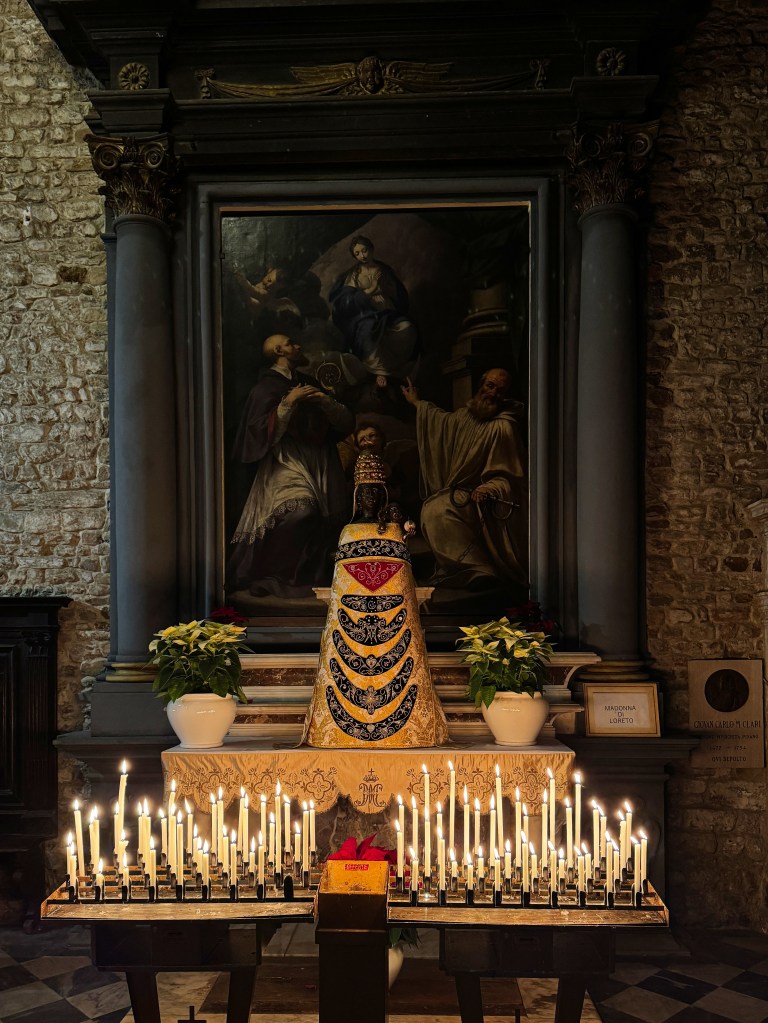
Wandering through Pisa’s old town has never felt so good. The city seems improved, better cared for, more beautiful. I can’t tell whether I’d simply been distracted in the past, or whether certain buildings were closed and are now open again, but this time I stumbled onto corners of Pisa I’d never really seen. One day, walking with my sister along Via dei Mille, we ended up at the Church of San Sisto. It was open. We slipped inside. Built on the site of the earlier San Pietro in Corte Vecchia, an ancient center of power in the Lombard and Carolingian eras, the current church was constructed in 1087 in the Pisan Romanesque style, using rough-hewn stone, and was consecrated in 1133. What a nice suprise.
4) Detail
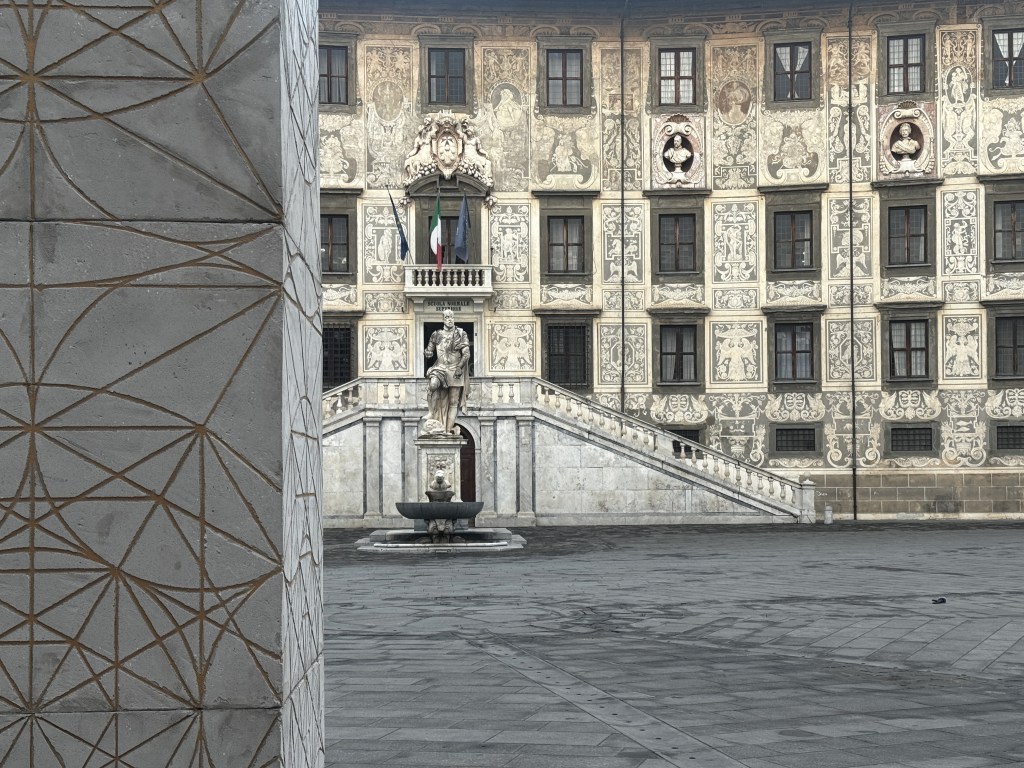
I’ve spent countless nights in Piazza dei Cavalieri over the 11 years I lived in Pisa. I’ve cycled through the square on my bike, got completely drunk with friends and rugby teammates on wild nights out, sat on the steps of Santo Stefano dei Cavalieri (and yes—Pisa has a lot of churches), and caught concerts here too. I can’t remember ever seeing this place empty, and I don’t remember seeing an art installation in the square before, a detailed that cought my attention more than the emptiness. The column on the left-hand side of the photo below is a 13-metre-tall installation made of 12 concrete cubes, topped by a life-size sculpture of a man seated and gazing toward the horizon. He feels anchored in the present, absorbing the world around him, while looking forward, held up by a pillar that suggests the weight and value of human intellect across history, forever searching for the laws behind the universe’s harmony. That day, Piazza dei Cavalieri earned a whole new level of appreciation from me.
5) Sensory anchor (food)
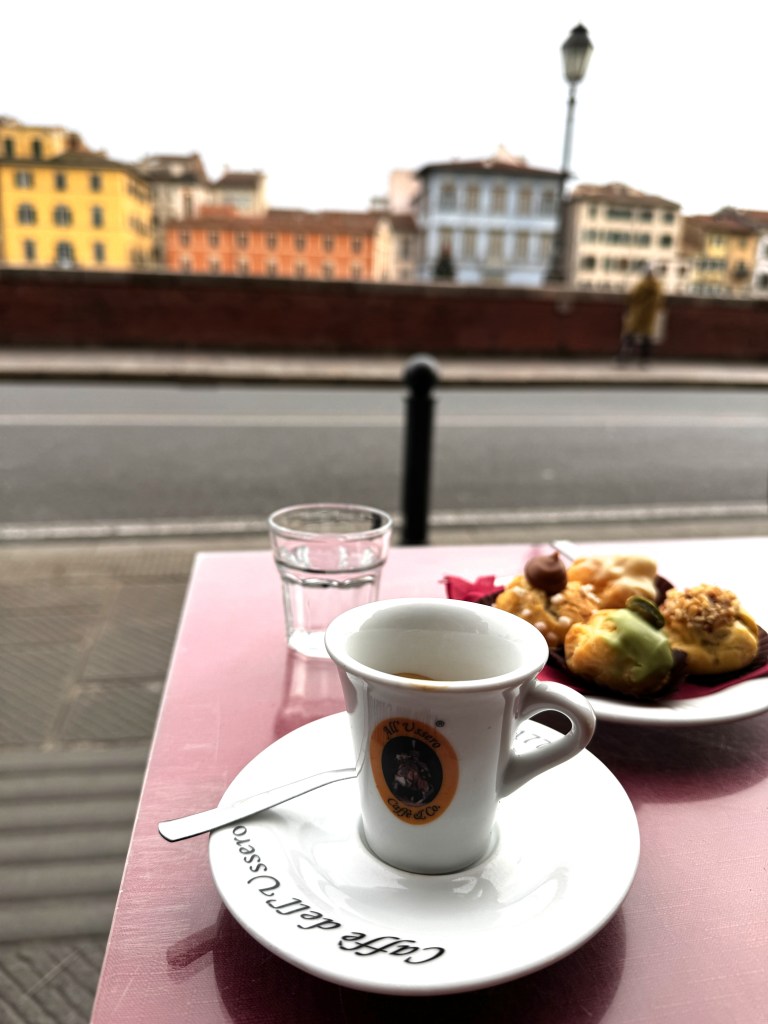
Caffè dell’Ussero, which I mentioned earlier, is probably my favorite place for a coffee in Pisa. It sits along the Arno (close enough to feel the river’s presence, even if you can’t quite see the water from your table) and across from the stretch where Palazzo Blu stands. Sitting there with a coffee and a few pastries felt exactly right. It brought a kind of quiet peace, as if the city had gently rewound itself: the familiar voices, the Pisan accent, the small rituals that used to be my everyday. Maybe it was the coffee, maybe the pastries, maybe the cadence of the place, but for a moment, I felt like I belonged to Pisa again, as if I’d never left.
I have bittersweet feelings about Pisa. It has been a huge part of my life, and it has given me a great deal. I’ve loved it and hated it; I’ve praised it and pitied it. I’ve met people who are now my closest friends, and others I hope I never cross paths with again. I’ve found inspiration in these streets, and at times I’ve felt trapped within them. I’m not sure I visit Pisa entirely lightly. I probably don’t. But I’ve made peace with it now, and the people who still live here are more than worth coming back for.
- Best part: The best part was definitely spending time with my sister and seeing some of my friends again. I can’t really put into words how happy it made me.
- Unexpected: I didn’t expect Pisa to feel this improved: more renovated buildings, better pedestrian areas, cleaner streets. Either the city has genuinely got better, or I’m simply more present this time.
- Note to future me: Next time, bring a warmer jacket.
Shot on iPhone 15 Pro · Edited in RawTherapee v 5.12

